
Sci-fi conspiracies and satira hit different when you’re in the right mood. You know the feeling. You’re halfway through a chapter, everything makes sense, and then the author quietly swaps one assumption and your brain does a full reset. Suddenly the friendly scientist is the villain, the villain is a decoy, and the real villain is an institution with a logo and a mission statement.
What I love about conspiracy sci-fi is how it turns big, abstract fears into something you can actually follow. Surveillance becomes a character. Propaganda becomes a plot device you can point at. Who benefits? becomes a literal question the protagonist asks while running for their life. And because it’s sci-fi, the dial can go way past realistic into oh no, that could still happen.
Also, conspiracies in sci-fi tend to be weirdly intimate. The best ones aren’t only about governments and shadow groups. They’re about memory, identity, consent, and who gets to define reality. It’s the kind of reading that makes you stare at your ceiling afterward and think, “Okay… but what if.”
What are the top Sci-Fi Satire Books?

Mission Earth Volume 1 (Mission Earth Book 1), by L. Ron Hubbard (2014)
This one kicks off with the kind of conspiracy premise that feels like a prank and a threat at the same time. Earth doesn’t exist, at least on paper, at least according to the people who keep the paper. That little twist sets the tone for everything that follows. When a planet can be erased by paperwork, you start seeing how power really moves.
At the center is an interstellar empire with a bureaucracy that’s both absurd and terrifying, because it’s competent enough to ruin lives while hiding behind committees and information apparatus. The story leans hard into the idea that the invasion isn’t the scary part. The scary part is how easily an invasion can be used as a cover for internal power grabs, corporate games, and political theater.
It’s also the rare conspiracy sci-fi that makes room for messy human systems as the main battlefield. Not laser fights, but institutions. Not heroic speeches, but incentives, addictions, and corruption. The plot keeps asking the same question in different clothes: if the world is being manipulated, are you even allowed to know it’s happening?
What worked for me is the scale. It’s big, but it’s not vague. It’s big in the way a real conspiracy is big, with lots of moving parts and people who think they’re doing the right thing while making everything worse. If you like conspiracies that feel like an ecosystem rather than a single secret, this scratches that itch.

Pink Eye, by Tom Norton (2024)
The everybody thinks I’m overreacting, and then it turns out I’m underreacting situation. Bobby Tucker is not a gentle, agreeable hero. He’s annoyed, stubborn, and very sure that Doctor Albert is the last person you’d want handling a world-changing discovery. Which is exactly why it’s funny in that stressed-out way where you’re laughing and cringing at once.
The catalyst is classic sci-fi. A strange signal arrives, someone answers, and now you’ve got incoming visitors. But the conspiracy angle isn’t only aliens are coming. It’s the sense that the whole event is being watched, judged, staged, and maybe even edited. Like humanity is on trial, but nobody agreed to the rules.
I like how it plays with small-town dynamics, too. Conspiracies often feel like they belong in capitals and labs, but here they spill into regular places with regular grudges. That makes the stakes feel sharper because you’re not watching professionals do professional things. You’re watching imperfect people scramble with limited time and worse communication.
What I liked most is the tone. It uses humor as a weapon, not as a distraction. The jokes don’t lower the stakes. They expose how fragile we are when something bigger than us shows up and expects us to perform. If you enjoy first-contact stories with a side of paranoia and a main character who refuses to play nice, this is a good time.

The Devil In Fine Print, by Jhani Mills (2025)
This one feels like it was built for people who love the moment when a conspiracy stops being theory and starts being logistics. The setup is sharp: a bestselling author realizes his latest plot is too close to something real, while his twin is pulled into scientific territory that attracts the wrong attention. Twins are already a built-in mirror. Add a secret organization with a long reach, and you get a story that can flip perspectives fast.
The conspiracy here has layers that play well with modern anxieties: hidden groups manipulating technology, knowledge treated like a weapon, and the uncomfortable idea that “innovation” can be guided from the shadows. It’s not only about keeping secrets. It’s about controlling what people think is possible, then nudging them toward the future that benefits the nudgers.
I also enjoyed the way it uses the writer-scientist split as a narrative engine. One brother is trained to tell stories, the other to test reality. That contrast turns into a question the book keeps pressing: when something unbelievable happens, who is more dangerous, the one who can explain it or the one who can prove it?
What landed for me is the pacing with purpose. It’s fast, but it still makes the conspiracy feel like a system, not a magic trick. If you like techno-thrillers where the secret society isn’t just spooky robes but has budgets, agendas, and a plan, this one delivers.

Altered Destiny (Altered Trilogy Book 1), by Ann Johnston (2025)
This is a conspiracy that starts in the most personal way possible: waking up in a place you didn’t choose, inside a body that’s been changed, surrounded by people who won’t answer basic questions. The main character isn’t only trying to escape a facility. She’s trying to figure out what counts as her when her body has become a project.
The AI angle makes the conspiracy feel current without turning it into a lecture. It’s about personhood, power, and the temptation to treat humans like upgradeable hardware. The secret isn’t merely that something happened. The secret is who signed off on it, who profits from it, and what kind of world is being built if this is considered acceptable.
I like stories where the conspiracy isn’t a single reveal but a pressure that keeps tightening. Here, the tension comes from dependency. The machine is help and threat at the same time. That creates a nasty kind of suspense, because escape isn’t a clean goal when survival might require cooperation with the very system that harmed you.
What I liked most is the moral discomfort. It doesn’t let you stay in a simple good-guys vs bad-guys mindset. It keeps asking, quietly but constantly, what it means to be human when your humanity is treated like a feature set someone else can edit.

The Memory Hunters (The Consecrated Book 1), by Mia Tsai (2025)
This one takes the conspiracy idea and makes it literal, because the past is something people can touch, steal, and sell. The story sits in a climate-worn future where blood memories can be extracted and studied, which turns history into a commodity and turns truth into a product someone can price.
The tension comes from who controls those memories and what gets left out. When the record of the past lives inside bodies, the usual gatekeepers of knowledge get replaced by institutions that can curate, censor, and weaponize experience. The book leans into the scary implication that you don’t need to burn books if you can edit what people remember in the first place.
It also has that great adventure-thriller engine: a headstrong academic, a protective companion dynamic, and a dangerous trail that keeps pulling them deeper into a secret that’s older and bigger than either of them expected. The conspiracy isn’t only there is a hidden truth. It’s our whole society might be built on an intentionally managed version of the truth.
What I liked is how it makes the conspiracy feel personal without shrinking the stakes. You’re not chasing a random clue on a wall. You’re chasing identity, lineage, and the right to say “this happened” in a world that keeps trying to rewrite the receipts.
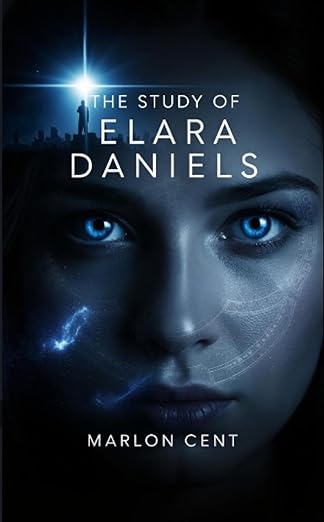
The Study of Elara Daniels, by Marlon Cent (2026)
This one hits a conspiracy nerve I personally find extra creepy. When a movement might be engineered. The lead is an FBI profiler who deals in facts and patterns, and he runs into an author whose cosmic-contact stories are inspiring people in a way that starts to look less like fandom and more like organized belief.
That alone is already interesting, because it frames conspiracy as social technology. Not chips in brains, but narratives in crowds. The book plays with the idea that fiction can be a delivery mechanism for something else, something structured, something designed to erode trust in institutions and redirect loyalty.
What makes it work is the ambiguity. The profiler is trying to decide whether he’s looking at genuine conviction, mass psychology, manipulation, or some blend. That tension is hard to pull off because it’s easy to make it preachy. Here, the suspense comes from the thin line between meaning and exploitation, between “people found hope” and “people were recruited.”
What I liked is the modern realism inside the strange premise. It feels grounded in how belief spreads today: charismatic figures, coded messages, communities that form fast, and the way distrust can be turned into fuel. If you like conspiracies that move through culture rather than through locked doors, this one is for you.
Final thoughts
If you read all six of these back-to-back, you’ll start noticing how many conspiracies boil down to the same battle: who controls the story. Whether it’s an alien empire “editing” a planet out of official reality, or a secret society steering tech, or an author’s ideas becoming a political tool, the core theme is narrative control. That’s why it messes with your head. It’s not only “what’s true,” it’s “who gets to decide what’s true.”
A fun little fact that always makes me smile in a dark way: conspiracies in fiction tend to be more coherent than conspiracies in real life. Real systems are messy, full of mistakes, rivalries, and people freelancing for ego. The best sci-fi conspiracies borrow that messiness. They show you factions inside factions, incentives that collide, and plans that succeed for stupid reasons. That’s when the story starts feeling uncomfortably plausible.
And honestly, I think that’s the real draw. These books let you play with paranoia in a safe container. You get the adrenaline and the pattern-spotting without the doomscroll hangover. You close the book, you’re a little shaken, but you also feel more awake. Like your brain just did a workout and now everything looks slightly sharper.
Also check our favorite selection of humorous sci-fi novels.


My profession is online marketing and development (10+ years experience), check my latest mobile app called Upcoming or my Chrome extensions for ChatGPT. But my real passion is reading books both fiction and non-fiction. I have several favorite authors like James Redfield or Daniel Keyes. If I read a book I always want to find the best part of it, every book has its unique value.










 English (US) ·