
Philip Glass assured his place in music history through a breathtakingly simple act of displacement: he took musical gestures that had served for centuries as secondary—busily windmilling arpeggios, stubborn ostinatos, the kind of figures that are more often played by a pianist’s left hand than their right—and treated them as his primary material. Because listeners have been conditioned to think of these as accompaniments, much of Glass’s music has a quality of incompleteness and longing: we cannot help but feel the phantom limb of the absent melody that these figures surely ought to be accompanying.For this reason, his music thrives in interdisciplinary works, when there actually is some other element in need of musical illumination: a stage picture, a dance, a cinematic scene, a spoken text. By many accounts, Glass is a friendly, obliging collaborator, and his music—fruitfully self-effacing, rarely complex enough to saturate or overwhelm the listener’s attention—behaves the same way. It might be this personality trait that has enabled him to achieve his paradoxical status as an icon of the avant-garde and also one of the most commercially successful of American composers. As he w...
Related

The Composer
15 hours ago
5


Want to Fight Book Bans? Start Here.
1 day ago
12

NO IFS, ANDS, OR BUTTS
2 days ago
18

Ming Smith’s Ming Smiths
3 days ago
21

📚 And the finalists are…
3 days ago
20

Links: Librarians, Cross Stitch, & More
3 days ago
24
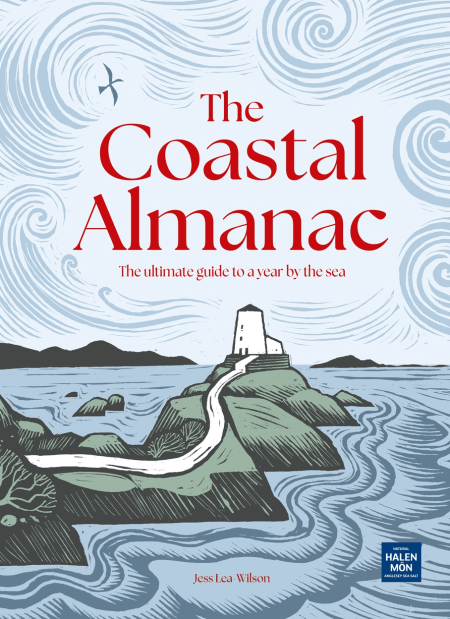
The Coastal Almanac by Jess Lea-Wilson
4 days ago
22
Popular

The Heir’s Beloved Blog Tour
1 week ago
157

Book of the Month October 2026 Selections
1 week ago
113


‘Writing on One Table’
3 weeks ago
63

New Graphic Novels for Hispanic Heritage Month
4 weeks ago
59

MAZYWOOD
2 weeks ago
56


October 2026 Queer Romances
1 week ago
55

Mother Country
3 weeks ago
53
 English (US) ·
 © Clint's Books 2026. All rights are reserved
