
Genetic engineering is no longer the stuff of far‑fetched speculation—it’s happening now. CRISPR, gene drives, designer babies, synthetic life… these technologies are reshaping how we understand biology, identity, and ethics. Science fiction, ever the imaginative crucible, uses genetic engineering to explore profound questions: What defines humanity? What responsibilities do creators bear toward their creations? Where do we draw the line?
Do you remember that moment in Never Let Me Go where Kathy, Tommy, and Ruth are at Hailsham, painting and dancing, completely unaware that their lives are planned from the start? The boarding school feels cozy, almost ordinary, until Miss Lucy drops the bomb—that they’re clones, created solely to donate their organs. They aren’t being trained for careers or adventures, but for donation and eventual death.
At first, the reveal almost slips by—these kids are so conditioned they don't even fully grasp Miss Lucy’s words. Their innocence masks a horrifying reality. They grow up caring for one another, believing in futures they’ll never live, and the emotional impact hits you harder because it unfolds through Kathy’s quiet, reflective voice. This book turned genetic engineering from a sci-fi gimmick into a silent moral earthquake.
This article attempts to collect some of the most interesting science fiction and thriller titles with the touch of sci-fi centered on genetic manipulation. These novels probe the moral, social, and personal implications of altering DNA. I also include a couple of timeless classics that paved the way for today’s genetic discourse. My selections blend thrilling plots, imaginative world‑building, and ethical depth. You’ll find corporate conspiracies, revolutionary science, alien biology, dystopian futures, and deeply moving human experiences. Let’s meet them.
What are the best science fiction books about genetic engineering?

Space Ants: Never Say Die, by Eric Kay (2024)
When discussing the best non-human aliens in sci-fi, my mind immediately jumps to the brilliant spider society in Adrian Tchaikovsky's Children of Time or the unforgettable Rocky from Andy Weir's Project Hail Mary. It takes a special kind of storytelling to step completely outside the human perspective and make us deeply empathize with a truly alien species. This book easily earns its place in the conversation of best alien societies in science fiction, offering a wildly entertaining and fresh take on insectoid survival in the deep cosmos.
The premise alone is wonderfully unique, a colony of space-faring ants fighting to adapt and expand within the hazardous rings of a gas giant. Instead of a traditional narrative, Kay uses a clever collection of serialized short stories that zoom in on different castes of the colony–from tireless handmaidens and brave scouts to valiant soldiers and the indomitable queen mother. What impressed me the most was how the author handles the hive dynamic. It explores a eusocial structure that feels surprisingly positive and engaging, even when the colony’s decisions are ruthlessly utilitarian. You find yourself genuinely cheering for (and sometimes fearing for) these little arthropod astronauts as they face down dehydration, asteroid impacts, and rival hives.
Despite the creative, hard sci-fi world-building, the book is just flat-out fun and incredibly accessible. It strikes that perfect balance of being a fast-paced adventure suitable for younger readers (definitely appropriate for 8th grade and up) while still delivering the imaginative depth that adult sci-fi fans crave. It makes you feel like an active observer discovering a beautifully strange, harsh ecosystem. If you are looking for a break from human-centric space operas and want to explore one of the most unique hive-mind societies in recent sci-fi, you absolutely need to pick this up.

R4g3 (Vein of Mortals Book 1), by Joshua Candamo (2025)
R4G3 starts with a premise that feels uncomfortably plausible. Project Joy is sold as a cure for disease and death, but after decades of failed trials, the only person who survives is a condemned murderer, Thomas Evers. That survival is not a clean win. The treatment does more than boost regeneration. It changes what Thomas is, tying him into something called the Veins of Galkur, a force that hints at an older, stranger layer of reality beneath the biotech. From there, the story becomes a tug-of-war over what Thomas represents: a miracle, a weapon, or a mistake that should never have been allowed to live.
Most of the human weight of the story rests on Dr. Charli Stanwick. She is caught between her duty as a scientist, her sense of guilt and responsibility toward Thomas, and a rising pressure from outside forces who want to control him. The U.S. military sees an asset. A secretive cult, the Societas Arcanorum, recognizes something sacred or dangerous in Galkur. Leon Spicer, a ruthless billionaire, just wants power. Watching Charli try to hold this mess together while Thomas wrestles with what he has become gives the book both its tension and its heart. It is not just about lab scenes and action beats. It is about what happens when a single human life carries the weight of someone else’s breakthrough.
I think R4G3 is great if you like genetic engineering stories messy and a bit wild. The mix of biotech and almost mythic forces will not be for everyone, especially if you prefer hard science fiction with neat edges. But I enjoyed the way it pushed the idea of “improvement” past simple lab results into questions about the soul and free will.
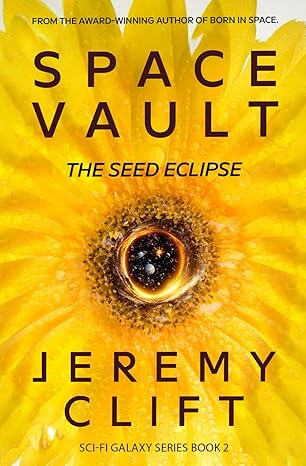
Space Vault: The Seed Eclipse (Sci‑Fi Galaxy series Book 2), by Jeremy Clift (2025)
Space Vault: The Seed Eclipse is a high-stakes thriller exploring biotechnology, artificial intelligence, and maternal instinct in a galaxy on the brink of war. Teagan Ward, determined to protect her bioengineered daughter Diana, navigates dangerous alliances and hostile factions aiming to control Diana's genetic blueprint. Born to survive deep space conditions, Diana holds the key to humanity's survival—but ruthless corporations, ambitious AIs, and alien races are willing to risk everything to claim her.
What stood out most vividly is Teagan’s fierce resolve, grounded in maternal love, as she faces overwhelming odds. Amidst the lunar Seed Vault, which safeguards Earth's last genetic codes, Clift vividly portrays how advanced biotechnology impacts personal identity and survival. Teagan’s struggle to shield Diana, while finding refuge among the endangered Tritan species, underscores deeply human questions of autonomy, belonging, and the very definition of life itself.
One particularly gripping moment finds Teagan and her allies racing through lunar tunnels, evading AI-driven surveillance ships in a scene of relentless tension and stunning imagery. Diana’s emerging abilities add emotional depth, transforming scientific intrigue into personal stakes. The author masterfully blends suspense, advanced science, and emotional resonance, delivering a science fiction experience both thrilling and thought-provoking.

Freeing Eden (Ascent of Eden Book 1), by G. S. Kenney (2025)
Freeing Eden blends genetic engineering with romance and planetary conflict. Kell emerges as a reluctant hero, torn between loyalty to his home Eden and the demands of a warlord design. Zara, genetically enhanced and caught in the tides of rebellion, confronts love, loss, and identity. Kenney builds Eden not just as a battleground but as a living entity shaped by biotech tinkering and emotional stakes.
I loved how the novel balances romance with ethical questions. It’s not just a tale of genetic power—it’s about whether engineered enhancements make us more or less human. Zara’s vulnerability contrasts beautifully with Kell’s internal conflict. The science feels plausible and the stakes real.
It felt like a heartfelt yet thought-provoking speculative epic, and every tweak to a genome or shift in allegiance reverberates through Eden’s luminous forests and storm-lashed seas, turning each chapter into a fresh test of how far love and conscience can stretch before they fracture.

Alien Clay, by Adrian Tchaikovsky (2024)
In Alien Clay, biologist Arton Daghdev is exiled from Earth and sent to a planetary prison called Kiln. There, amidst alien biotechnology and ancient ruins, he confronts challenges to evolution itself. Tchaikovsky masterfully explores how genetic manipulation blends with ideology, how species define themselves, and how science can become both salvation and a tool of oppression.
I admire Tchaikovsky's world-building: Kiln’s alien ecology feels alive and unpredictable. Arton’s internal struggle between scientific curiosity and moral consequence is compelling. The book isn’t just about lab coats and test tubes, it’s about power and finding agency in a world bent by science.
One of the most fascinating parts of the novel is how Kiln itself is almost a character. The alien biotechnology seems to observe, react, and evolve in unsettling ways. As Arton interacts with this living environment, he must constantly reassess what it means to be human. This interaction brings tension and complexity to the narrative, making readers question the very foundations of identity and evolution.

NanoMorphosis, by Marla L. Anderson (2018)
NanoMorphosis thrusts us into a toxic near future. Climate collapse, engineered nanotech plagues, and tentacled hybrids unravel the boundary between organic and machine. Between charismatic entrepreneurs and ecological ruin, a scientist caught in the crossfire races to stop biotech‑infectious chaos.
What stood out to me was Anderson’s fusion of nano and genetic engineering. The creepy brilliance is how nanobots hijack DNA to remake organisms on the micro scale. The sense of dread and the vivid descriptions of mutated flora gripped me. It’s a potent warning about meddling at the smallest scale without understanding the consequences.

Rogue Sequence (Ander Rade Book 1), by Zac Topping (2024)
This story introduces Ander Rade, a living weapon shaped by genetic programs. After decades on the battlefield, his sense of purpose fractures. When captured and thrust into gladiatorial pits, he begins to question who he is and what others expected him to become.
The strength of this story is Ander’s fractured identity. Topping navigates violence, memory, and agency with grace. The arena battles thrill, but it’s Ander’s search for self and his ethical awakening that lingered with me. It’s a gritty look at the human cost of genetic militarism.
Through Ander, the author examines how past traumas and engineered destinies can clash with the inherent human desire for self-determination.

Under the Eye of the Big Bird, by Hiromi Kawakami (2024)
This haunting mosaic features humans bred in factories from animal DNA under AI oversight. Moments of psychokinesis, gills, and photosynthesis all point to evolution accelerated by desperation. The AIs themselves have become part-organic, part-machine, blurring the lines between creator and created in a world struggling to survive.
Rather than focusing on the grand narrative of this altered world, the book presents a series of intimate, interconnected vignettes. Each story acts as a window into a different community or an individual life, exploring the personal and societal implications of these profound changes. We witness the quiet moments, the strange new social rituals, and the personal struggles of characters navigating a reality where their very biology is a radical experiment. This ground-level perspective is what makes the high-concept premise feel so tangible and immediate.
Through this lens, the emotional tone becomes cold yet mesmerizing. Kawakami doesn’t offer easy answers. She shows us kaleidoscopic lives shaped by science, power, and mutation. This collection is more about atmosphere and ideas than plot, but its lingering strangeness and quiet heartbreak made it unforgettable.
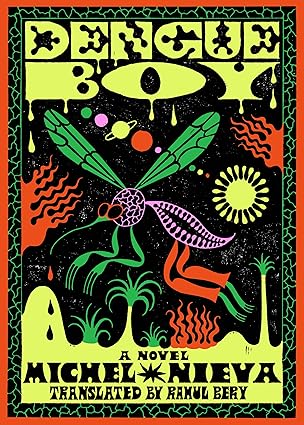
Dengue Boy, by Michel Nieva (2025)
Set in a dystopian Argentina of 2272, Dengue Boy plunges readers into a world ravaged by climate collapse, where much of the landscape has been swallowed by rising seas. In this broken future, a corporate-funded biotech experiment births a human–mosquito hybrid who becomes the eponymous Dengue Boy. Ostracized at school and abandoned by society, the protagonist’s body becomes a battleground of genetic absurdity and social cruelty.
Nieva’s prose is a feverish cocktail of body horror and surreal satire—one moment the mutant child is enduring torment, the next unleashing telepathic powers or violent revenge. The transformation into Dengue Girl is both horrifying and cathartic, symbolizing not just personal rebellion but a violent uprising against a system profiting from pandemics and inequality. The narrative spirals into fever-dream territory, full of telepathic stones, pandemic stock markets, and a viral apocalypse that echoes our own biotech anxieties.
What makes this novel unforgettable is its unapologetic embrace of the grotesque—even as it skewers the corporate profiteers of our world. The vivid fusion of insect physiology and human emotion makes Dengue Boy as unsettling as Kafka and Cronenberg at their most hallucinatory. Yet beneath the shock, there’s a haunting truth: this creature’s violent awakening is a reckoning, a biological scream for justice in a world that has commodified both life and suffering.
Final thoughts on genetic engineering sci-fi reads
Genetic engineering stands at a moment of tension. Its power to cure diseases and create environment‑proof crops exists alongside deep ethical pitfalls. Today we see CRISPR used in gene therapy, gene drives targeting invasive species, and synthetic organisms emerging from labs. The tools are here, the consequences rest with us.
These books reflect that tension. From space‑born Seed Vault sabotage to mosquito-human hybrids, they echo real-world fears and hopes. They remind us that biotechnology can heal or unleash horrors we barely comprehend. What defines life? Who gets to choose? As we write our own genetic code, we inherit these fictional warnings and templates for responsibility.
Do you remember that scene when Dr. Ian Malcolm first warns Hammond about the dangers of genetic power? He says, “Genetic power is the most awesome force the planet’s ever seen, but you wield it like a kid that’s found his dad’s gun.” That moment is chilling because our real-world CRISPR breakthroughs echo exactly this hubris. Engineers can remove entire chromosomes, but questions about “should we” loom large. Just like in the film, where dinosaurs break loose and children hide in overturned cars, our modern biotech has an incredible capacity to surprise—and sometimes harm—us in unexpected ways.
Hammond’s obsession with taming nature to entertain and profit mirrors today’s biotech push to edit genomes for advantage. But as Malcolm warns, when we rush genetic breakthroughs without discipline or reflection, we risk everything. Similarly, our growing ability to reprogram life forces us to confront our ethical limits. As we write our own genetic code, we inherit both the promise of healing and the cautionary legacy of sci‑fi, reminding us that true responsibility means thinking deeply before we edit the very fabric of life.
Genetic engineering isn’t some distant future—it’s happening right now. These books, whether they're hot-off-the-press thrillers or time-tested classics, make you sit back and really think: Who are we, what do we want to become, and is it even worth the price?
If you're into epic space sagas that poke at humanity's next steps, or gritty biotech thrillers that make your skin crawl, there’s something here for you. Some might leave you blown away by dazzling leaps in evolution, others might fill you with a slow, creeping dread about how biotech could backfire. Either way, they stick with you and get you talking long after you turn the last page.
Still curious? Check out our ranked science fiction book list (it's packed with more stories that bend genes, twist futures, and ask what it really means to play god in a brave new world).


My profession is online marketing and development (10+ years experience), check my latest mobile app called Upcoming or my Chrome extensions for ChatGPT. But my real passion is reading books both fiction and non-fiction. I have several favorite authors like James Redfield or Daniel Keyes. If I read a book I always want to find the best part of it, every book has its unique value.








 English (US) ·