
For Authors
Writers today are navigating a landscape where every creative decision can trigger backlash before readers even open the book. Familiar formulas feel safe, but clinging to them too tightly can leave a series feeling stale or irrelevant. One of the latest examples is the online controversy surrounding Star Trek: Starfleet Academy, where the newest entry in the franchise has drawn criticism for taking risks and trying something new.
But as Ginger points out in this week’s blog, Star Trek has a long history of breaking its own formula to survive, and there are clear parallels to the challenges self-published authors face with their own long-running series. From handling reader expectations to committing to bold creative choices, he explores why evolution is not just optional but necessary, and how authors can stay true to their vision even when some fans want the past to last forever.
Robert Picardo’s back must be hurting from seemingly carrying the entire weight of marketing Star Trek: Starfleet Academy these last few months.
The beloved Voyager actor has been everywhere promoting the new series, appearing at Comic-Con panels, conducting interviews, and serving as the franchise’s enthusiastic ambassador. Meanwhile, the Internet has been flooded with videos and posts declaring how “woke” and terrible the show is, before most critics had even watched the first episode.
It’s exhausting, this cycle of manufactured outrage. Even Stephen Miller, the White House Deputy Chief of Staff and Homeland Security Advisor, took time out from his day job to tweet about how Paramount needs to hand creative control of Star Trek to 94-year-old William Shatner to “save the franchise.” When a senior government official is devoting energy to culture war complaints about a science fiction show (instead of his normal focus of driving this nation into fascism) you know we’ve entered peak absurdity.
The worst part is: It works. I’ll confess, the negativity got to me. I found myself procrastinating about watching Starfleet Academy, a show I would normally be excited about. The drumbeat of criticism created a kind of preemptive disappointment, lowering my expectations before I’d even given it a chance.
But when I finally sat down and watched the first episode, something unexpected happened. I was swept up in the story. I enjoyed it, though perhaps more as a science fiction adventure than as traditional Star Trek.
The Game I Wanted vs. The Show I Got
Full disclosure: I wanted Starfleet Academy to be like the 1997 video game of the same name. That PC game was glorious: a space combat simulator wrapped in full-motion video sequences featuring William Shatner, George Takei, and Walter Koenig as instructors. I remember playing it on my homebuilt Pentium back in my first year at university. I played as a cadet running through missions in starship simulators, learning to command a vessel while uncovering a conspiracy within the Academy.
The game captured something essential about what Starfleet Academy should be, a crucible where cadets learn the principles that will guide them through impossible situations. It was about testing yourself against scenarios designed to push you to your limits, about learning when to follow the rules and when to think creatively.
The new show is different. It’s more coming-of-age drama than simulator challenge, more focused on interpersonal relationships than tactical problems. And yes, that disappointed me initially. But as I watched, I realized my expectations were limiting my ability to appreciate what the show was actually trying to do, and that’s a shortcoming most of the criticism is guilty of, as well.
The Challenge of New Trek
The real challenge facing Star Trek: Starfleet Academy isn’t that it’s “too woke” or that it features young, diverse characters. The challenge is much more fundamental. How can you create “new” Star Trek when the original formula was perfected decades ago?
The Next Generation established a template that felt definitive. Each episode presented a contained science fiction story with philosophical or moral dimensions. The crew encountered a problem, debated solutions, and resolved it, usually within 45 minutes. The ship moved on to the next adventure. Reset button. Rinse and repeat.
Critics complaining about modern Trek keep demanding “real” Star Trek return to this formula. They got their wish with Strange New Worlds, which has been praised for its episodic structure and optimistic tone. But here’s what those critics conveniently forget: Trek has been experimenting with and breaking its own formula since the 1990s.
Breaking Formula Isn’t New
Deep Space Nine, often cited as the “best” Star Trek show, threw the entire premise out the window in only the third incarnation of the show. No ship exploring strange new worlds—instead, the show was set on a static space station. No neat episodic adventures—instead, serialized storylines stretched across entire seasons. The show dealt with war, religious fundamentalism, terrorism, and the compromises people make to survive.
DS9 was criticized when it aired for being too dark, too political, and not “real” Star Trek. Today, it’s beloved precisely because it dared to be different.
Voyager was lambasted as “politically correct” when it launched in 1995 for having a female captain. Conservative critics complained it was pandering. Sound familiar? But Voyager also disrupted the formula by stranding its ship in the Delta Quadrant, far from everything familiar. No Federation support, no Klingon politics, no Romulan neutral zone. It was just the episodic adventures of a crew trying to get home.
The idea that Trek breaking formula is some modern betrayal rings hollow when you realize the franchise has been reinventing itself since Deep Space Nine premiered in 1993. Formula-breaking isn’t killing Star Trek, it’s how the franchise has survived.
Evolution Is Essential
This is something self-published authors should pay attention to. Breaking formula isn’t just acceptable, it’s essential for long-running series. Stories that rigidly adhere to the same structure eventually become stale, no matter how good the original formula was.
Think about video games. Super Mario games maintain the same core mechanics, but each iteration introduces new elements that eventually become staples of the series. From wall-jumping to the tanuki suit to Cappy possession mechanics, Nintendo understands that repetition without evolution leads to irrelevance.
The same principle applies to storytelling. If every Star Trek show followed The Next Generation‘s exact template, we’d be bored by now. The franchise would have died in the early 2000s.
To really enjoy Star Trek—or any long-running franchise—you have to be willing to take each iteration on its own terms rather than hating it for not being exactly what came before.
Painted Into a Corner
There’s another factor critics ignore about Starfleet Academy. With this new show, the writers have painted themselves into a corner. Starfleet Academy is set in the 32nd century, during the period after “The Burn” (a cataclysmic event that destroyed most warp-capable ships and caused the Federation to collapse.)
This setting was established in Discovery. Whether you liked that creative choice or not, it’s now canon. You can’t just ignore it. The Federation is rebuilding. Starfleet Academy is accepting its first new class in over a century. These are the parameters the show must work within.
You might not like what the writers have done with the Star Trek universe, but they have to follow through with those decisions. If not, the entire narrative becomes meaningless. You can’t establish that the Federation nearly ended and then pretend everything is fine a few years later (or go back and make another prequel, with they’ve done to death with Enterprise, Strange New Worlds, and even the first three seasons of Discovery.)
For self-published authors building series, this is a critical lesson. Your creative decisions have consequences. If you establish stakes in Book 1, you can’t just reset them in Book 3 because they’re inconvenient. Readers will notice, and they’ll feel cheated.
The Starfleet Academy writers are dealing with the consequences of choices made in Discovery. They’re trying to tell a story about rebuilding, about a new generation learning to be better than the one before. That’s actually a very Star Trek concept, if you’re open minded about it.
Familiar Ground
Here’s something else the critics missed: Starfleet Academy mirrors the Voyager pilot quite heavily. In both stories, a captain recruits a criminal to help accomplish her mission. In Voyager, Captain Janeway needs Tom Paris, a disgraced former Starfleet officer imprisoned for betraying the Federation. In Starfleet Academy, Captain Ake recruits a cadet with a questionable past to help with a critical situation.
This parallel isn’t accidental. It’s the show signaling that it understands Star Trek’s history while doing something new with familiar elements. It’s evolution, not betrayal.
The show also features several returning characters—Robert Picardo’s Doctor, Tig Notaro’s Jett Reno, Oded Fehr’s Admiral Vance—connecting it to Discovery and Voyager. These aren’t just fan service cameos. They’re bridges between eras, showing us how the Federation’s values persist even as circumstances change.
The Real Criticism
Now, I’m not saying Starfleet Academy is perfect. It isn’t. The first two episodes lean heavily on coming-of-age drama tropes that may feel overly familiar to anyone who’s watched shows like The CW’s superhero series. Some dialogue is clunky. The pacing occasionally drags.
But these are legitimate creative criticisms, very different from the bad-faith attacks dominating social media. Saying “the dialogue in scene X could be tighter” is constructive. Saying “three women talking about spatial anomalies is woke garbage” is not.
The show holds an 85% “Certified Fresh” rating on Rotten Tomatoes from critics. That suggests it’s competently made and offers something of value, even if it’s not everyone’s cup of Earl Grey.
Why This Matters for Authors
Self-published authors can learn several lessons from the Starfleet Academy controversy:
First, breaking formula requires confidence. The showrunners knew they’d face backlash for not making The Next Generation 2.0, but they did it anyway. When you’re writing Book 5 in a series, you might need to take risks that deviate from what made Books 1-4 successful. Trust your creative instincts.
Second, you can’t please everyone, so write for your actual audience. The people raging about Starfleet Academy before watching it were never going to be satisfied. They want something that no longer exists and probably never will again. Write for readers who are open to evolution, not for people determined to hate whatever you create. You also need to write to attract new fans, instead of appeasing the older ones (the fogeys like me!)
Third, context matters. The show exists within a specific point in Star Trek’s timeline, with specific constraints and opportunities. Similarly, each book in your series exists within the context of what came before. You can’t ignore continuity, but you also can’t be paralyzed by it.
Fourth, give your work a chance to find its audience. Some of the best Trek series started rocky and found their footing in later seasons. The Next Generation‘s first season is rough. Deep Space Nine took time to establish its voice. Voyager‘s early seasons are uneven. But all three eventually became beloved.
The Exhausting Culture War
Perhaps what frustrates me most about the Starfleet Academy backlash is how it’s been weaponized in culture war nonsense. Star Trek has always been progressive. The original series featured one of television’s first interracial kisses. The franchise has consistently promoted diversity, tolerance, and the idea that humanity’s future depends on cooperation rather than conflict.
These aren’t bugs, they’re features. Gene Roddenberry deliberately created Star Trek as a vision of a better future where humanity had moved beyond prejudice and worked together to explore the cosmos.
When Stephen Miller and his ilk complain about modern Trek being “woke,” they’re either ignorant of the franchise’s history or deliberately misrepresenting it. Star Trek has always been what they’re calling woke. They just didn’t notice when the progressive themes aligned with what they found acceptable.
For authors, this is another reminder. Your work will be interpreted through ideological lenses you can’t control. You can try to avoid controversy, but if you’re writing anything remotely thoughtful, someone will find something to be outraged about. Focus on telling your story well rather than trying to preemptively defuse bad-faith criticism.
Taking It On Its Own Terms
When I finally watched Starfleet Academy without the weight of manufactured outrage clouding my expectations, I found a science fiction adventure about young people learning to be better than they thought they could be. It’s not The Next Generation. It’s not Discovery. It’s not the 1997 video game I loved.
It’s something new, trying to carry the Star Trek torch forward into territory the franchise hasn’t fully explored before. That’s worthy of respect, even if the execution isn’t always perfect.
The show features spectacular production design—the Starfleet Academy atrium set is reportedly the largest ever built for any Star Trek production. The cast is committed and engaging, even if they’re still finding their characters’ voices. The story has potential, with hints of larger mysteries to unravel.
Most importantly, it feels hopeful. In an era where science fiction often embraces dystopia and cynicism, Starfleet Academy presents young people working together, learning from mentors, and striving to make the galaxy better. That’s fundamentally Star Trek.
The Lesson
All in all, I don’t think Starfleet Academy deserves the criticism it’s received. Much of the backlash is performative outrage from people who decided to hate the show before watching it. The rest comes from fans who want Star Trek to remain forever frozen in a specific era rather than evolving.
For self-published authors, the takeaway is clear. Your readers will include people who want the exact same thing you gave them last time, and people who want something completely different. You can’t satisfy both groups simultaneously.
What you can do is commit to your creative vision, execute it as well as possible, and trust that there’s an audience for what you’re creating. Not everyone will like it. Some people will hate it before they’ve even experienced it. That’s fine.
The alternative—endlessly replicating the same formula because it worked once—leads to creative death. Better to take risks, break formulas, and trust that the readers who matter will come along for the journey.
Starfleet Academy is taking that risk. Whether it succeeds or fails, at least it’s trying to be something other than a nostalgic retread. In a media landscape drowning in reboots and requels, that ambition deserves recognition, even if the execution remains imperfect.
Besides, it was Captain Kirk himself who told us: “Risk is our business.”
Personally, I think Robert Picardo deserves our gratitude for enthusiastically championing a show that’s trying, however imperfectly, to carry Star Trek’s vision into the future. Even if his back hurts from carrying the marketing burden, he’s doing it with the same dedication he brought to the Doctor for seven seasons of Voyager.
That’s the kind of commitment—to the work, to the vision, to the future rather than the past—that both Star Trek and self-published authors need to thrive.
Share this blog
About the Author
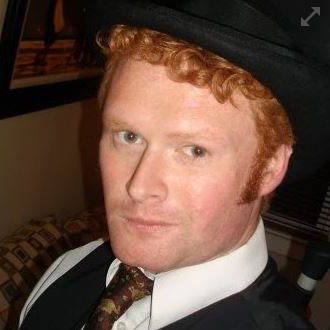
Ginger is also known as Roland Hulme - a digital Don Draper with a Hemingway complex. Under a penname, he's sold 65,000+ copies of his romance novels, and reached more than 320,000 readers through Kindle Unlimited - using his background in marketing, advertising, and social media to reach an ever-expanding audience.











 English (US) ·